
Module · Fixed asset management
What the business owns, what it is worth, and the depreciation behind it
An asset register by category, building and project; straight-line depreciation in one run per period; and disposals that settle the asset out of the books.
How it flows
An asset’s life in the books
Draft, active, inactive or disposed — and a posting at each step that moves money.
- Draft
- Capitalised
- Monthly depreciation
- Disposal
- Disposal · gain or loss posted
See it
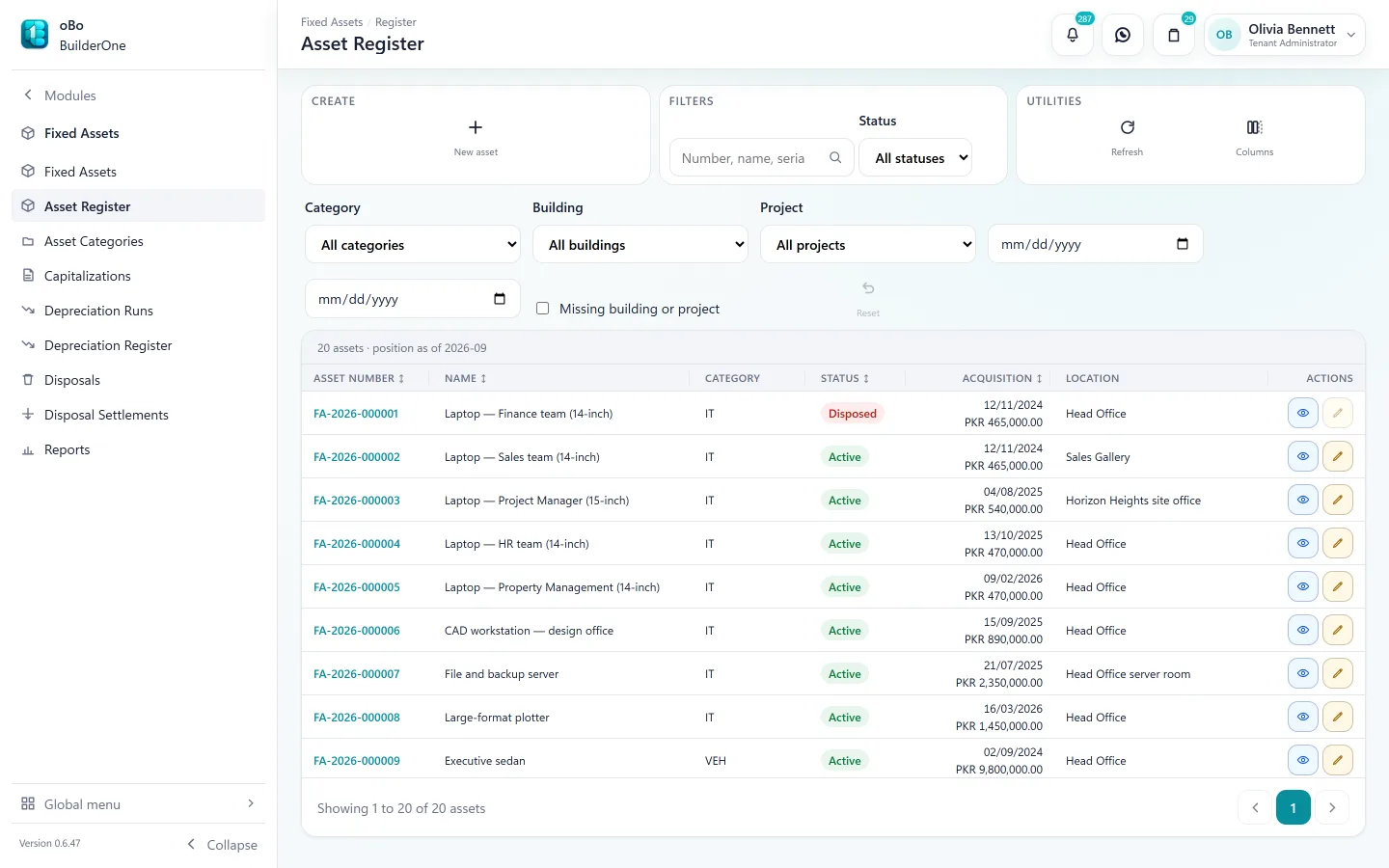
The Fixed Assets screens your team works in
Capabilities
What Fixed Assets covers
Asset register
Assets with their components, category, cost, location, building and project.
Categories carry the policy
The depreciation accounts are set on the category and the useful life defaults from it; an asset can override its own useful life.
Capitalisation
A draft asset is activated and capitalised as its own posted document.
Depreciation runs
One straight-line run per period, previewed before posting and reversible afterwards.
Depreciation register
What was charged, on which asset and component, in which period.
Disposals and settlements
Disposal removes the asset and its accumulated depreciation and books the gain or loss; settlement records the proceeds received.
In the books
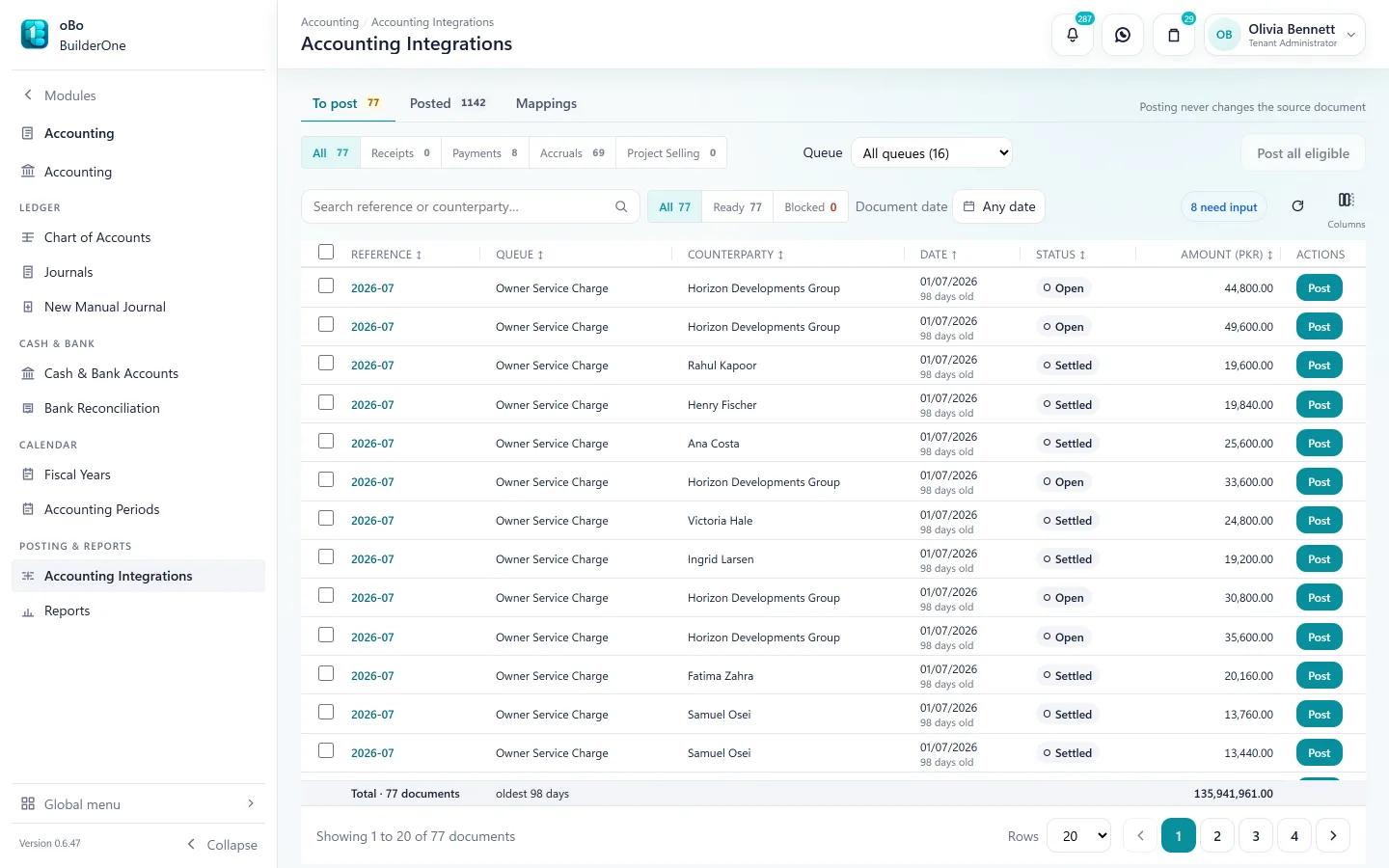
What Fixed Assets posts to Accounting
Each step that moves value is a posting with a document behind it — not a journal someone remembered to write.
- Capitalisation → the asset at cost
- Depreciation run → depreciation expense and accumulated depreciation
- Disposal → cost and accumulated depreciation written out, and the gain or loss
- Settlement → the proceeds received against the disposal
Reports
Registers and statements included
All exportable to Excel and PDF, or printed.
- Fixed asset register
- Asset capitalisation register
- Depreciation register
- Depreciation run register
- Asset disposal register
- Disposal settlement register
Works with
- Accounting — capitalisation, depreciation and disposals post to the ledger
- Projects and buildings — assets carry the dimension they belong to
- Procurement — the purchase behind an asset
Straight answers
Questions buyers ask us
Specific to Fixed Assets.
Which depreciation methods are supported?
Straight-line. Other methods are not available.
Can a run skip an asset with a problem?
No. A depreciation run is all or nothing: it posts only when every eligible component is clear, and the screen lists what is stopping it.
Can a posted run be undone?
Yes — by reversal, which leaves both the run and its reversal on record.
See BuilderOne running on a business like yours
A walkthrough of about half an hour with the team that builds it — on your kind of projects, units and billing, not a canned slideshow.
- Tell us what you run. Four fields — it takes under a minute.
- We get back to you to arrange a time that suits you.
- We walk through your workflow — sale, rent, site or books — in the real product.